If you hear someone say, “Oh, I just flew to Indonesia,” you’re likely to imagine the landscapes of Bali. Some people who skipped geography class in school believe that Indonesia is entirely located on this famous island. After all, it’s known as an “island nation.” In fact, Indonesia is not just an island nation, but the largest island nation in the world, spanning over 17,000 islands on both sides of the equator, with coastlines bordering the Pacific and Indian Oceans. While only about a third of these islands are inhabited, Indonesia is one of the most densely populated countries in the world, and nearly 10,000 islands are unnamed. This is a country of contrasts, where skyscrapers made of concrete and glass in the big cities coexist with huts made of leaves and branches in the primitive jungles.
Indonesia is a true treasure trove of ancient nature, which is rightfully proud of its incredible variety of plant and animal species, many of which can only be found here. Indonesia is also a country of volcanoes, with over 400 volcanoes, 80 of which are active. Indonesia is a country that has blended Islam, Buddhism, Hinduism, and Christianity, and each island has its own unique atmosphere, traditional cuisine, and entertainment.
Is it worth visiting Indonesia for its beautiful beaches? Absolutely! And also for the beaches of Lombok, the Javan black orchid, the Sumatran rhinoceroses and the famous Komodo dragons, for snorkeling, diving, trekking, ecotourism, immersion in history in ancient temples, for getting acquainted with the music, crafts and traditions of local tribes.
Java Island
Java is the “capital” island of Indonesia. It is on Java that Jakarta is located – huge, noisy, modern. The capital city alone is home to over 13 million people. Although Java is not as famous for its beaches as Bali, places like Panggalan and Pasir Putini offer a clean and comfortable environment. Don’t miss the opportunity to try the local cuisine, including nasi goreng, satay, and gaja minang.
Visiting Java is like visiting Moscow while traveling in Russia. There are many attractions to suit every taste, including the Lara Jonggrang, Prambanan, Borobudur, Gebang, Surawana, and Sambisari temples, the Sultan’s Palace, and the traditional villages of Karanganam and Churasmandi, where you can learn about the crafts and arts of Java. The largest mosque in Southeast Asia, the Istiqlal Mosque, is located here, as well as the Jakarta History Museum, the Indonesian National Museum and Oceanarium, the Orchid Garden, and the Taman Sari Water Castle.
The island’s volcanoes are a separate topic.
The Merapi Volcano, whose name translates to “Fire Mountain,” is an active volcano that offers guided tours.
— Ijen Volcano is famous for its blue lights and caldera, which contains the sulfurous lake Kawah Ijen.
— Bromo Volcano, named after the god Brahma, is a culturally significant site with stunning sunrise views.
Additionally, the Bromo-Tengger-Semeru National Park is a must-visit natural wonder in Java. 500 square kilometers, some of which are located in the mountains, and some of which are covered with a humid tropical forest, which includes 226 species of orchids.
Komodo Island
The island is famous worldwide for its inhabitants. The length is over 3 meters, the weight is over 80 kilograms, and the age is over 4 million years. A real prehistoric monster, it’s no coincidence that the Dutch sailors, who were the first Europeans to see these animals, mistook them for dragons and even claimed that the lizards breathed fire. While fear can make things seem bigger than they actually are, these carnivorous lizards, which can sense blood from up to 5 kilometers away, are excellent swimmers and can run faster than a dog, are not creatures to be encountered without the guidance of experienced professionals. The Komodo dragons have made the island a part of a national park, but they are not the only creatures to be found here. The waters around the island are teeming with life, home to over 1,000 species of fish, more than 250 species of reef coral, sharks, giant stingrays, dolphins, sea turtles, dugongs, and 14 species of whales. The island’s tamarind and mangrove forests are teeming with cockatoos, king pigeons, and even flying foxes.
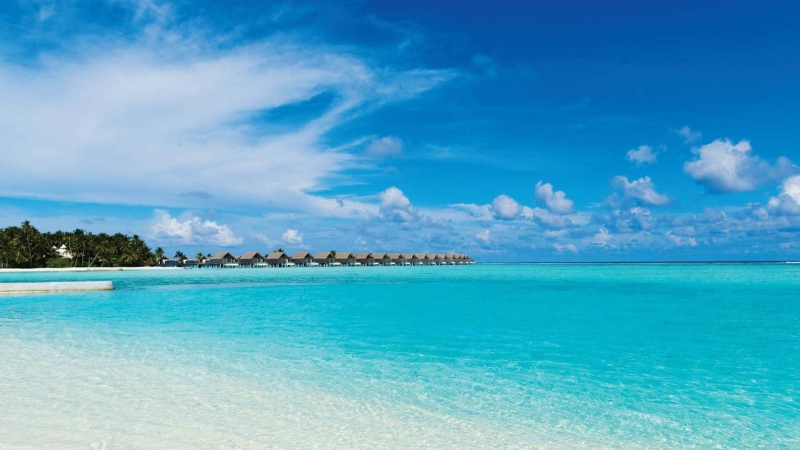
The beaches of Komodo Island are a work of art, with white or pink coral sand that shines like a jewel under the sun.
Lombok Island
Just 20 minutes from Bali by plane – and everything changes. The slow, calm rhythm, the pristine beaches, the untouched nature, and even the climate are different. Lombok is much drier, with less rainfall. The “Island of a Thousand Mosques” is strikingly different from Hindu Bali in terms of both its architecture and its ethnic composition. The majority of its inhabitants are Sasak, a distinct ethnic group, some of whom practice a unique form of Islam known as Vetu Tulu, with its own traditions and crafts, particularly in the form of weaving. This includes the production of unique fabrics such as songket and ikat.
If you’re looking for a more peaceful and clean beach experience in Bali, then you might want to consider visiting Lombok. The most famous of the beaches is Senggigi, but if you are ready for a short trip around the island, you will discover the unique bays of Lombok: the ideal “postcard” beach with white sand, turquoise water and palm trees, Tanjung Aan, Mangsit beach with black volcanic sand, Pink beach, which owes its color to local corals, Pandanan, which offers a beautiful view of the lush green hills, and beyond the water you can see the islands of Gili Trawangan and Gili Meno, Sire Beach, from where it is so convenient to admire the view of the huge peak of Mount Rinjani, Kaliantan beach, where the only licensed kitesurfing school in Lombok operates. Lost in the jungle, secluded, or bustling with beach volleyball and local cafes, there’s a beach for everyone.
In addition to its natural wonders, Lombok offers a variety of attractions. Man-made wonders include the Pura Meru temple complex, which consists of 33 shrines and three 11-tiered pagodas and is dedicated to the gods of Hinduism, the mysterious and beautiful Mayura Water Palace with its serene water gardens, and the unique Pura Lingsar temple, which is used for both Hindu and Muslim prayers.
Another notable attraction on the island is the Rinjani volcano, which is the second-highest volcano in Indonesia. For the Indonesians, this mountain is a sacred place, and pilgrimages are made to it on full moon days. In the Rinjani caldera, there is a lake called Danau Segara Anak. Its turquoise waters hide many gold ornaments that pilgrims throw into the water.
“You must avoid the well-trodden path of the crowd” (c) Francesco Petrarca.
There is no truer quote for travelers, as the most interesting things happen where you haven’t been yet. Just a little deviation from the usual route – and now you are playing a staring game with an ancient dragon, admiring the sunset over the pink sand, entering the temple at the crater of the volcano. Discover your unique Indonesia!